Recognizing escalation in domestic abuse, how to get help
Jan. 14, 2026 | KACU 89.5 FM
Jan. 28, 2026 | West Texas Tribune
In 2024, 161 Texans were killed in domestic violence incidents.
Just this past December, Desree Sanchez was stabbed to death, and her husband, Anthony Emilio Sanchez, was arrested by the Abilene Police Department and the Taylor County Sheriff’s Office on a murder charge. According to jail records, Sanchez has been booked on various charges over the years, including family violence, aggravated robbery, assault, and multiple DWIs.
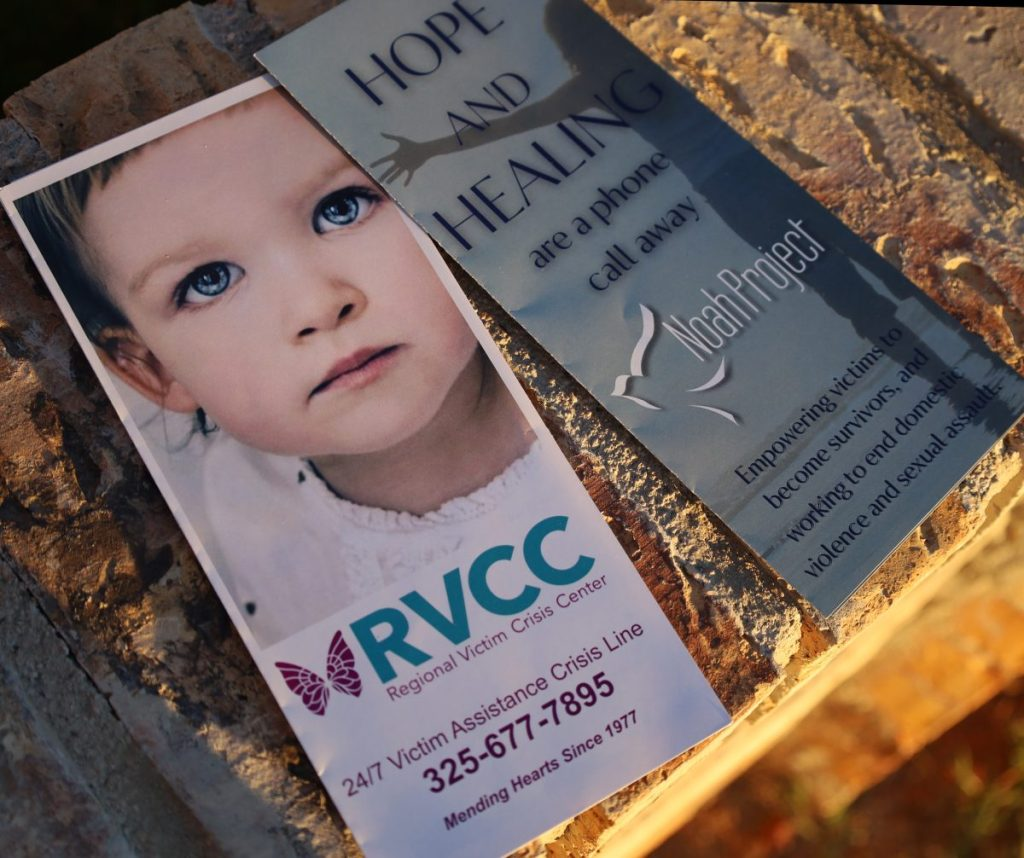
Both the Noah Project and the Regional Victim Crisis Center (RVCC) located in Abilene offer free, confidential support for victims of domestic violence.
Alana Jeter, executive director of the Noah Project, said, “The criminal justice system has its flaws, just like every system. And repeat offenders definitely are sad to see, but the punishment for those crimes is something beyond our scope over here.”
Janey Wawerna, executive director of the RVCC, said that the APD, FBI, Texas Rangers, Homeland Security, Hendrick Hospital, and several other institutions work closely with the RVCC to refer clients for support.
In cases like Desree Sanchez’s, more often than not, “people always want to know, why did she stay? Why didn’t she get out of that? Not, why did he behave so badly? There’s an instant gravitation to the victim, questioning the victim’s choices and behavior,” Wawerna said.
Feelings of shame and blame keep victims from asking for help.
“The question needs to be, why do they (the abuser) do that? And try to address that problem. Then you won’t have any reason to question a victim because you’ll have less victims,” Wawerna said.
According to the National Crime Victimization Survey conducted by the Bureau of Justice Statistics, only around half of all domestic violence incidents are reported to law enforcement. Abusive cycles can develop over years, making it difficult for a victim to recognize when a situation has escalated to being dangerous and unacceptable.
Abusive partners try to isolate their victims, not allowing them to have access to their friends or family.
“A lot of perpetrators or abusers, that’s the very first thing they do, is closing someone’s circle of friendship, circle of relationships, and so they don’t have someone to reach out to for help,” Jeter said.
Constant one-sided conflict may be a sign of abuse. This could include putting a partner down, calling them degrading names, or trying to convince a partner that they are not good enough for the rest of the world and would not survive outside of a relationship. Degrading language may not always present itself as conflict; it may also show up in everyday conversation.
“Having community is the biggest way to combat domestic violence in the home because you’re taking away that privacy and isolation that leads to people being able to control someone’s life enough that they’re not getting help the first time something happens,” Jeter said.
Abusers make their victims feel diminished as an individual. Victims may feel uncomfortable sharing what they think and feel with their partner. They constantly have to perform to keep the peace instead of just being relaxed and real.
“When you feel like you don’t even know what you want anymore because someone’s told you what you need to do, say, and how to do it, you’re in a bad relationship,” Wawerna said.
Even when a victim realizes they need to leave an abusive relationship, there are several barriers and dilemmas that can make it seem impossible.
An abuser may leave little to no space for their victim to escape. Those who are scared that reporting will put them in more danger should call either the Noah Project or the RVCC crisis line. Both hotlines operate 24 hours a day, seven days a week.
“Our crisis line advocates are trained to have that conversation about safety planning, not just making an appointment for you to come in, but when is the best time for you to come? What documents should you be gathering as you’re getting ready to leave? And so absolutely, speaking directly to one of our advocates is the best thing you can do,” Jeter said.
If leaving during the day is not an option, the Noah Project’s shelter is always open.
“People can also just come to our gate, talk to someone in our home for the first time, whether it’s two in the afternoon or two in the morning,” Jeter said.
Jeter said most safety plans look like leaving when the perpetrator is not there. If a victim has school-aged children, they should plan to escape while their children are at school if possible, and then pick them up.
If a victim can gather their ID, birth certificate, and social security card, as well as their children’s, they should bring them with them when they leave. Further safety plan details can be found on the Noah Project’s website.
A victim may decide to stay with their abusive partner for the sake of keeping a family together. In Wawerna’s experience, children pick up on the little behaviors of their parents more than parents realize.
“There’s kiddos that are in a household where they just know it’s broken and it’s not right. And there are kids where they just have this underlying feeling because maybe mom says stuff like, ‘your dad’s gonna be home soon, do this, do that, do this,’ trying to always keep it super peaceful,” Wawerna said.
The RVCC offers counseling to the mother or father leaving a bad relationship, and their children.
“Some kids are so resilient, and you work with them two or three times, and they’re ready to go, but that makes the mom or dad, whoever’s made the exit, feel better because they know their kids are going to be in a healthier place,” Wawerna said.
Financial control can prevent a victim from feeling they could ever live or support a family without their abusive partner. The Noah Project and RVCC have people who will guide a victim through how to get a job if they have never stood by themselves, show them how to get out of a lease, and how to get deposits waived in the future.
“We see in our shelter a lot of times the intersection of poverty and domestic violence, because those who are on that brink are borderline in poverty levels or have no financial control. When they walk away, they have nothing,” Jeter said.
The Noah Project can shelter individuals and families as they establish a new life for themselves to be able to eventually afford rent without the support of their abuser or the shelter.
There’s no rhyme or reason to who could be a victim of domestic violence. Several outreach clients have their own jobs and lives, but still need help, just not shelter.
One in three women will experience some sort of violence in their lifetime. If you, a friend, or a family member is a victim of domestic violence, human trafficking, or sexual assault, call the Noah Project hotline at 325-676-7107 or the Regional Victim Crisis Center at 325-677-7895. If a life is immediately in danger, call 911.