Free breast exams reach underserved West Texas communities
April 13, 2026 | KACU 89.5 FM
April 13, 2026 | West Texas Tribune
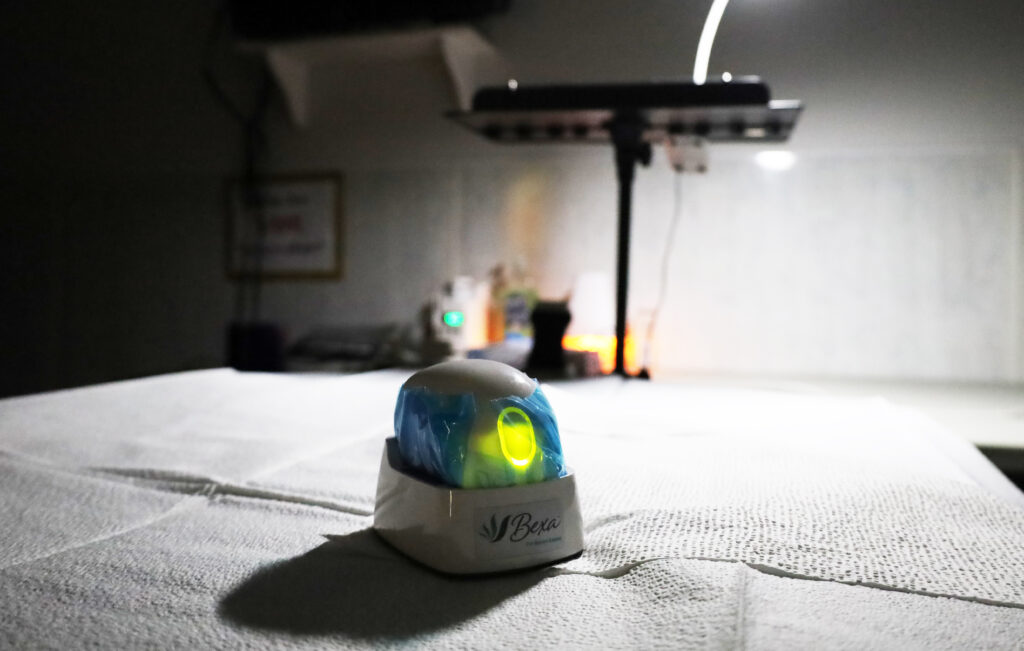
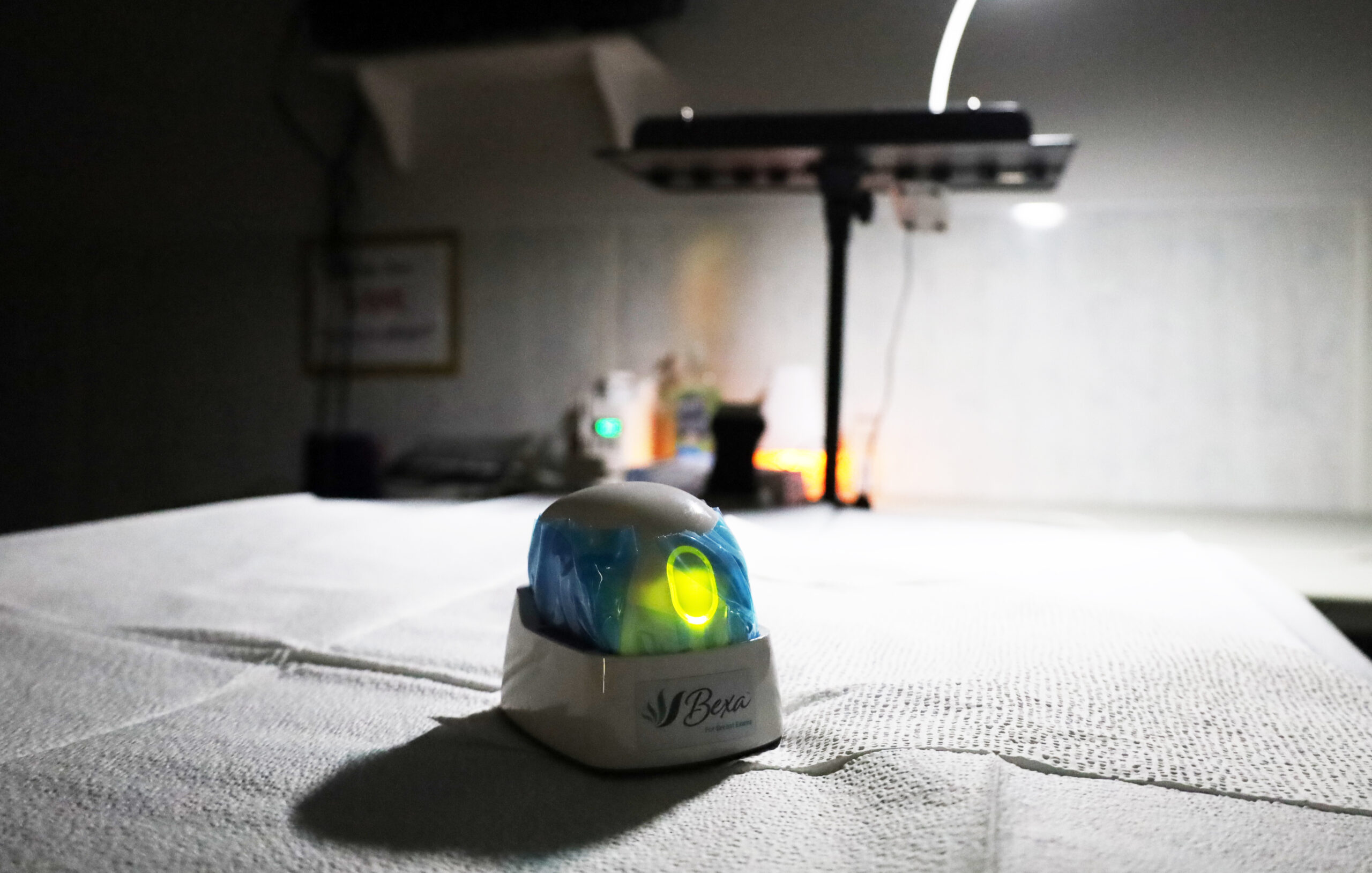
The Access to Breast Health for Texans program provides free breast exams to anyone who is 18 or older. They use a Bexa medical device that is about the size of a computer mouse and delivers accurate, painless and radiation-free exams.
Through a partnership with Texas Tech University Health Sciences Center, nearly 3,000 women in the Big Country and Concho Valley regions have been seen for a Bexa exam since November 2024.
Tamara Alexander, director of rural initiatives at TTUHSC, is a breast cancer survivor. She said breast exams are important because usually, the symptoms of breast cancer are undetectable in its early stages.
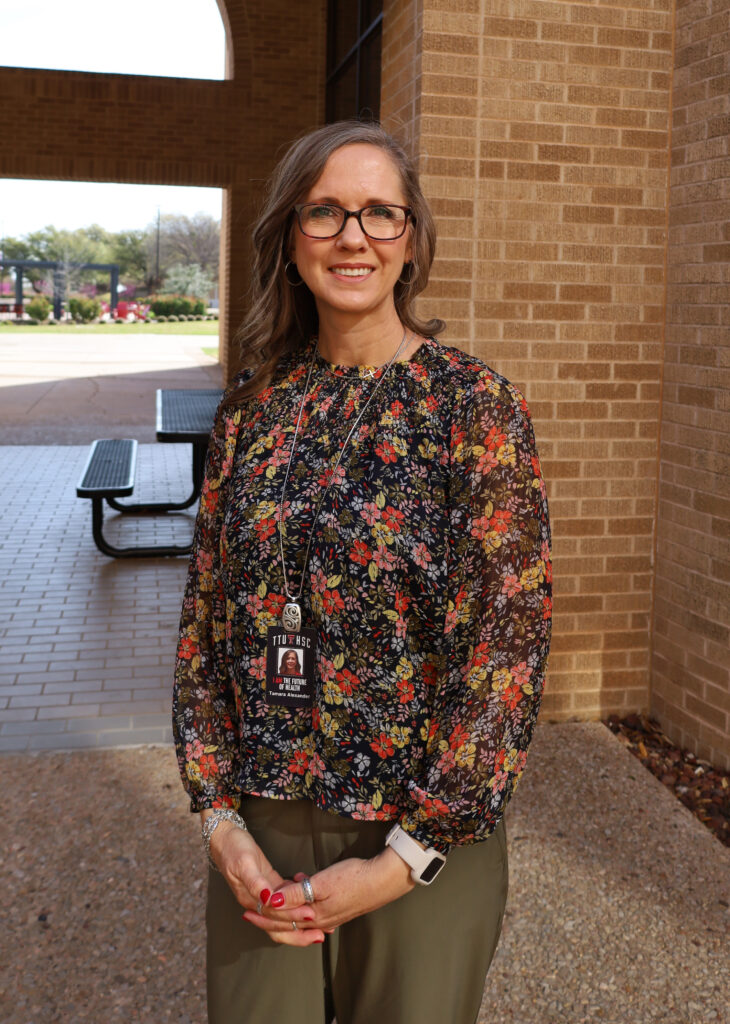
“With my particular case, it was so tiny and so deep into my chest wall, I had no idea, I never felt anything,” Alexander said.
Alexander went to the doctor annually for mammogram screenings, which helped the doctors catch her cancer early. When breast cancer is caught early, the five-year relative survival rate is over 99%. She decided to do a radical double mastectomy, followed by a complete hysterectomy three months later.
Breast cancer that is not caught in the earlier stages will spread to other parts of the body, usually bones, lungs or the liver. This is called metastatic breast cancer and is considered to be incurable.
According to the American Cancer Society, there is a 1 in 8 chance that a woman will develop breast cancer at some point in her life, and yet, CDC data also shows that about 1 in 4 women aged 50-74 are not up to date on their mammograms. Women who report cost as a barrier to accessing health are twice as likely to skip or avoid the routine mammogram.
“Women have a really hard time putting their health care first because they have jobs, they have husbands, they have children, and they always worry about those items first. They don’t always take proactive measures for their own health,” Alexander said.
Breast cancer targets women of all ages. Pearl Merritt, senior director of outreach at the Laura W. Bush Institute, said that it is becoming more common for women in their 20s and 30s to get breast cancer. It is critical that younger women do routine breast exams, as research shows that women diagnosed with breast cancer before the age of 40 face significantly higher mortality rates.
“And so when we do have the exams, there’s several women in their 20s that want to come. Maybe their mother had it, and their grandmother had it. They don’t do a mammogram because it’s not going to be paid for at that young age,” Merritt said.
The goal of the Access to Breast Health for Texans program is to break down barriers to screening, such as age, distance and cost. Every week, the two operating teams set up in a different town. In total, they serve around 40 counties. Alexander said they hope to have a team set up in the Midland-Odessa area by June or July.
Teams avoid holding their exams in hospital settings that could be intimidating and deter patients from signing up for an appointment.
“We try to set up in accommodating situations like churches and community centers. We’ve set up an exam room at a boutique before, so anywhere that will host us, we are happy to go in and make that work,” Alexander said.
During the exam, patients lie down on a heated massage table, essential oils are sprayed into the room and soft music plays. The goal is for patients to be as calm and relaxed as possible.
Wendy Stolz, a licensed sonographer, explained that the Bexa device uses sound waves to read through breast tissue. She looks for spots that are stiffer or less elastic than the surrounding tissue.
A detected spot doesn’t necessarily mean there is cancer. Stolz said it could be a clogged milk duct, scar tissue or a cyst. Regardless, if the Bexa device detects something that could be cancerous, the sonographer does an ultrasound right then and there to get more information.
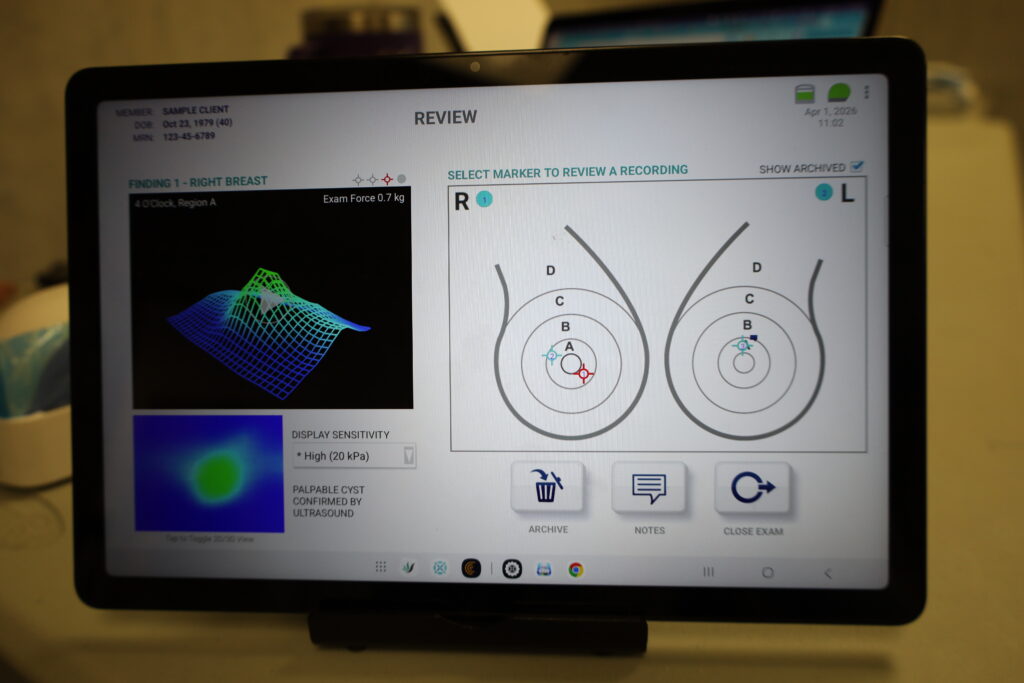
“The only time they don’t get results immediately is if we have to do an ultrasound, because then it has to be read by a radiologist. But still, that turnaround time is 48 hours, so that’s much quicker than even a screening mammo,” Stolz said.
There are pros and cons to both mammograms and Bexa exams. Mammograms pick up microcalcifications, which are tiny calcium deposits in the breast tissue that may develop into cancer, more often than Bexa exams do.
Alexander said both options are highly accurate and that Bexa is not in competition with mammography.
“We always recommend both. But women love Bexa. It’s painless, there’s no radiation, pregnant women can have a Bexa exam, women under 40 can have a Bexa exam, a man can come in and have a Bexa exam,” Alexander said. “So it touches a lot of populations and age groups that wouldn’t necessarily be going in to get a routine mammogram.”
Signing up for a Bexa exam is easy. Patients can pick a time slot that works for them through this link: https://qr.bexaequityalliance.org/abhtalllocations/. There is no wait time, and patients are usually done with the exam in 15 minutes or less.